
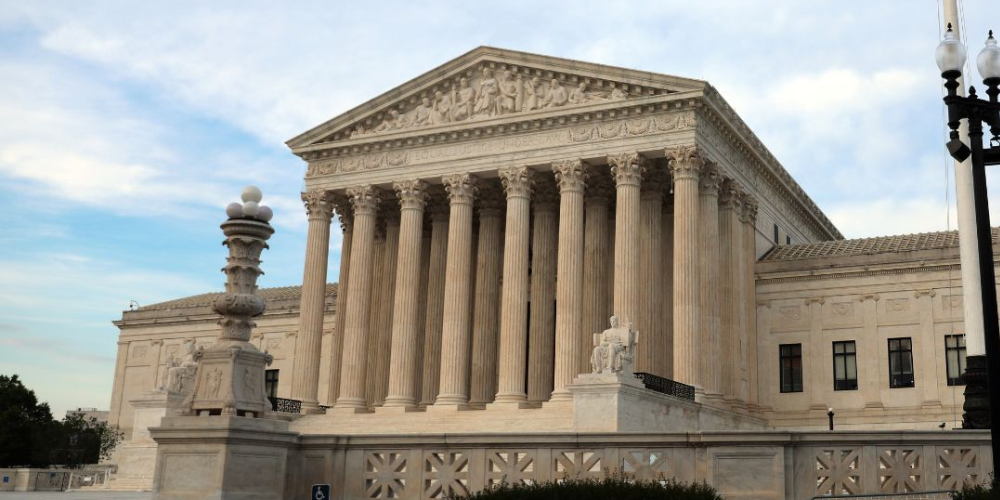
What the Supreme Court’s Final Term Rulings Mean for Americans
The Supreme Court ended its term with several major rulings that could shape national debates around constitutional rights, government authority, and public policy. The final decisions covered birthright citizenship, transgender participation in school sports, and campaign finance limits. These rulings brought strong reactions from legal experts, lawmakers, and the public.
To understand the impact of these cases, NPR’s Michel Martin spoke with Kim Wehle, a professor of law at the University of Baltimore School of Law. Wehle, who teaches constitutional law, civil procedure, administrative law, and federal courts, shared her analysis of how the court reached these decisions and what they could mean going forward.
Birthright Citizenship Ruling Draws Attention
One of the most closely watched decisions involved birthright citizenship. The Supreme Court ruled that nearly all children born in the United States are entitled to citizenship under the 14th Amendment.
Michel Martin pointed out that the decision appeared to support the long-standing interpretation of the amendment, which states that “all persons born” in the country are citizens. Wehle noted that the language itself appears straightforward, explaining that the court could have simply relied on the constitutional text.

Instagram | ubaltmain | Constitutional law expert Kim Wehle shared her insights on the court’s latest decisions and their long-term effects.
The ruling came through a closely divided court. The decision was 5-4, or 6-3 when considering Justice Brett Kavanaugh’s separate opinion. Wehle explained that the debate itself shows how a previously settled constitutional principle has become a major political issue.
She also discussed how the justices approached the question differently. Chief Justice John Roberts focused on history and tradition, pointing to the common law principles that influenced citizenship rules in the United States. According to Wehle, this approach matched the majority’s preference for relying on constitutional text, history, and established practices.
Justice Clarence Thomas disagreed with the majority and connected the issue to the history of the 14th Amendment and the rights of formerly enslaved people. Justice Ketanji Brown Jackson responded by questioning whether some interpretations of constitutional principles were being applied differently depending on the issue involved.
Court’s Decision Timing Raises Questions
The timing of the birthright citizenship ruling also attracted attention because it was released on the final day of the Supreme Court’s term. Wehle suggested that the court may have been mindful of concerns about its public authority and legitimacy.
She explained that the Supreme Court does not have its own enforcement system, such as a police force or military. Its power comes from the constitutional role established through cases like “Marbury v. Madison,” which confirmed the court’s authority to interpret the Constitution.
Wehle suggested that delaying a major ruling until the end of the term may have reduced immediate public attention. She compared it to releasing important news at a time when fewer people are closely watching.
Court Limits Transgender Sports Participation
Another major ruling involved transgender athletes in school sports. The Supreme Court decided that states may restrict transgender girls and women from participating in sports programs at publicly funded schools, including high schools and colleges.
Wehle said the outcome was not unexpected for many court observers. She explained that the decision focused on how the term “sex” should be interpreted under Title IX, the federal law that prevents sex-based discrimination in education programs receiving federal funding.
She noted that the issue differs from an earlier employment discrimination case, where Justice Neil Gorsuch wrote that protections under Title VII could include transgender individuals. In this case, the majority viewed Title IX’s reference to sex as relating to biological differences connected to athletic competition.
The court centered its reasoning on the original purpose of Title IX, which Congress created in the 1970s to address major inequalities between men’s and women’s sports programs. According to the majority, lawmakers designed the law to protect fairness in athletic opportunities.
Campaign Finance Limits Face New Challenges
The Supreme Court also issued a major decision on campaign finance rules. The justices struck down limits on how much political parties can raise and spend in coordination with candidates. The ruling could affect how political parties support campaigns and manage election spending.
Kim Wehle explained that this decision was another example of the court making significant changes in areas involving government regulation. She highlighted concerns raised by Justice Elena Kagan in her dissenting opinion. Kagan argued that removing these limits could allow political parties to function like an alternative source of campaign funds.
In her dissent, Justice Kagan wrote that the ruling could allow donors to give very large amounts of money to political parties. These contributions could reach hundreds of thousands of dollars. Wehle noted that campaign finance cases can be hard for many people to understand. However, she explained that this decision could have a major effect on how money flows through the political system.
The ruling reflects a broader debate over the balance between political participation and financial influence. Supporters of fewer restrictions argue that political parties should have more freedom to support candidates. Critics worry that fewer limits could increase the role of wealthy donors in elections.
Court’s Relationship With Presidential Power

Instagram | whitehouse | Despite legal setbacks on citizenship and tariffs, the Supreme Court did not completely reject Trump’s policies.
Looking at the Supreme Court’s full term, Wehle explained that the decisions cannot be judged only by whether they supported or opposed President Donald Trump’s agenda.
She pointed to the birthright citizenship ruling and the decision on President Trump’s tariff program as examples. In both cases, the administration faced legal setbacks. However, Wehle said these rulings do not mean the court rejected all of the president’s policies.
Instead, she noted that other decisions from the term could have a stronger effect on presidential power. For instance, she highlighted the court’s views on the president’s ability to remove certain officials and the role of federal agencies. These issues, she said, may create long-term changes in how the executive branch operates.
In addition, the professor explained that the court’s decisions reflect a complex connection between constitutional law, government authority, and political debates. Some rulings may relate to current conflicts. However, their impact can continue long after one administration ends.
Constitutional Questions Remain Central
The Supreme Court’s final rulings showed how constitutional interpretation shapes major national debates. The decisions covered citizenship, education, elections, and presidential power. Each case involved different parts of the Constitution and federal law.
The birthright citizenship case focused on the 14th Amendment and whether the government could limit its protections. The transgender sports case examined how Title IX applies to sex-based protections. The campaign finance case looked at the government’s power to control political spending.
The justices had different views on how courts should interpret laws. Some focused on historical meaning and traditional legal approaches. Others gave more attention to broader constitutional ideas and current legal issues.
The Supreme Court’s decisions sparked discussions about citizenship rights, fairness in education, election funding, and presidential authority. Professor Kim Wehle explained how these rulings connect to larger questions about the court’s role and constitutional protections.
Some decisions affected President Trump’s policies directly. However, their impact extends beyond one administration. These rulings will continue to shape legal debates and public discussions about how the Constitution applies to major issues in the United States.
More in Law Degree
-
 New Housing Law May Help Renters Become Homeowners More Easily
For years, renting felt like a financial dead end for many people. You pay on time every month, yet your credit...
April 4, 2026 -
 Colorado Law Bars Adult Prosecution for 11-YO Accused of Killing His Minor Brother
A quiet neighborhood in Centennial, Colorado, became the center of a heartbreaking investigation after a five-year-old boy was found dead inside...
March 29, 2026 -
 How to Handle Unpleasant Family Habits at Home Without Conflict
Family life isn’t always easy, particularly when someone’s habits start clashing with the way a household runs. From awkward bathroom routines...
March 29, 2026 -
 Britney Spears Rep Calls DUI Arrest an “Inexcusable Incident”
Britney Spears has spent decades in the public eye, but the latest headline about the pop icon carries a serious tone....
March 22, 2026 -
 Atlanta Woman Arrested in $79K Fraud After Impersonating Sheriff Captain
Authorities in Florida recently exposed a disturbing fraud operation that relied on fear, impersonation, and digital money transfers. Investigators say a...
March 22, 2026 -
 GOP Senators Urge Justice Department to Release All Trump Epstein Files
Republican senators are turning up the pressure on the Justice Department. They want every document tied to Jeffrey Epstein released to...
March 15, 2026 -
 Kilmar Abrego Garcia Seeks Dismissal of Tennessee Smuggling Case
Kilmar Abrego Garcia arrived at a federal courthouse in Tennessee as a legal fight surrounding his case continues to draw national...
March 13, 2026 -
 Is It Legal to Prune Your Neighbor’s Tree? Here’s What You Should Know
Trees do not respect property lines. Branches stretch across fences, roots push under patios, and leaves clog gutters all fall long....
March 8, 2026 -
 Sarah Ferguson 6 Companies Dissolved After Epstein File Release
Fresh filings in the United Kingdom have placed Sarah Ferguson back in the spotlight. Six companies directed by the Duchess of...
March 7, 2026
More From Lawyers Favorite
-
 Celeb JusticeKenny Chesney Wins Court Case in $300K Online Scam
A California appeals court has ruled in favor of country singer Kenny Chesney after a fan sued him over an online...
August 27, 2026 -
 Legal AdviceSprouts $5M Settlement – Eligibility, Deadline and Details
A $5 million proposed settlement involving Sprouts Farmers Market could provide payments to eligible grocery shoppers who received receipts containing too...
August 20, 2026 -
Law DegreeWashington Bar Exam Canceled After NextGen Test Faces Tech Issues
The debut of the new national bar exam faced an unexpected setback after technical failures forced Washington state to cancel its...
August 14, 2026 -
 Criminal AttorneyEurope Fines Google $1 Billion in First Major Digital Markets Act Case
Google is facing one of its biggest regulatory setbacks in Europe after the European Union imposed a €890 million ($1 billion)...
August 7, 2026 -
 Celeb JusticeR. Kelly Files Clemency Request to Reduce 30-Year Prison Sentence
R. Kelly has submitted a clemency request to the U.S. Department of Justice, asking for a reduction of his combined 30-year...
July 30, 2026