
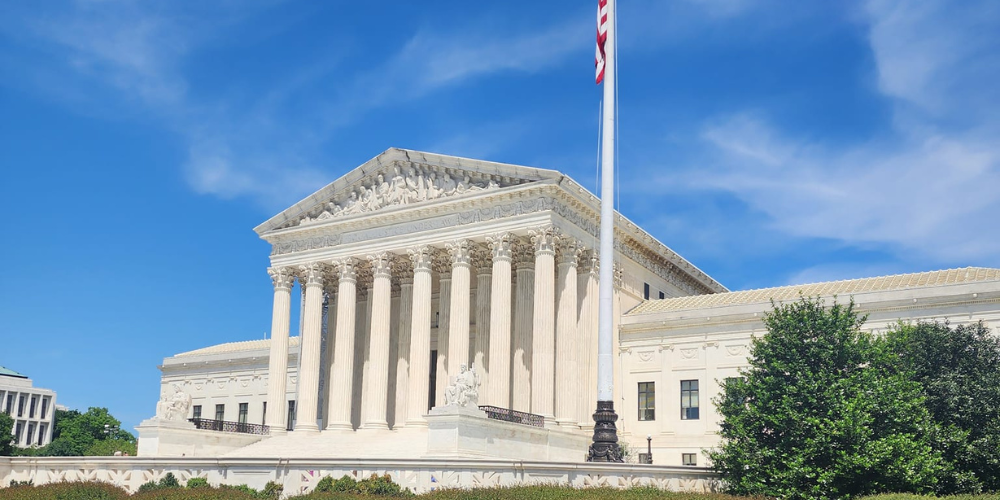
US Supreme Court Limits Sentence Reductions for Federal Prisoners
The U.S. Supreme Court has issued a major ruling that reshapes how far prison reform laws can reach into past sentencing. On Thursday, the Court decided that judges cannot grant early release to federal inmates simply because current sentencing laws would have given them shorter prison terms.
The decision centers on the 2018 First Step Act, a criminal justice reform measure passed during Donald Trump’s presidency aimed at easing strict sentencing rules from earlier decades.
The 6–3 ruling, backed by the Court’s conservative majority, upheld lower court decisions involving two Pennsylvania inmates who sought reduced sentences under the law. The case adds fresh boundaries to how courts interpret “compassionate release” under federal law.
Court Draws Limits on Sentence Reduction Claims

Linkedin | Reuters Legal | Early release based on updated federal sentencing laws has been rejected by the Supreme Court.
At the heart of the dispute were arguments from two men convicted in separate armed robbery cases. Both claimed they should qualify for early release because sentencing standards have changed since their convictions.
The Court rejected that position, stating that the First Step Act does not automatically allow courts to reduce older sentences based on today’s sentencing reforms.
The ruling also addressed how the law applies in broader situations. In a separate but related decision issued the same day, the Court ruled that federal prisoners cannot use the compassionate release provision to challenge their convictions indirectly by raising doubts about their guilt or case validity.
Together, the rulings reinforce a narrower reading of the First Step Act, limiting how judges can apply it to long-serving inmates.
Cases of Daniel Rutherford and Johnnie Carter
The decision specifically reviewed the cases of Daniel Rutherford and Johnnie Carter.
Daniel Rutherford received a prison term of nearly 42½ years for two armed robberies committed in 2003.
Johnnie Carter received a 70-year sentence linked to a series of armed bank robberies in 2007.
Under current sentencing rules introduced after the First Step Act, both men argued they would have faced significantly lower mandatory minimums—about 14 years for Rutherford and 21 years for Carter.
Justice Amy Coney Barrett noted this gap in sentencing but stressed that Congress did not make the reform retroactive for such cases.
Majority Opinion and Legal Reasoning
Writing for the majority, Justice Amy Coney Barrett stated that Congress did not intend for the First Step Act to serve as a tool for revisiting older sentences simply because the law has changed.
She explained the limits of “compassionate release” under federal statute, writing:
“Compassionate release is available only when a court finds that ‘extraordinary and compelling reasons warrant’ a sentence reduction.”
She added a key boundary in interpretation:
“The disparity that results from Congress’s decision to leave a sentence untouched cannot serve as one of those reasons.”
The Court also rejected a 2023 policy from the U.S. Sentencing Commission, introduced during the Biden administration, which allowed judges to consider sentencing disparities created by later legal changes. The majority concluded that the policy exceeded statutory authority.
Dissent Warns of Narrow Interpretation
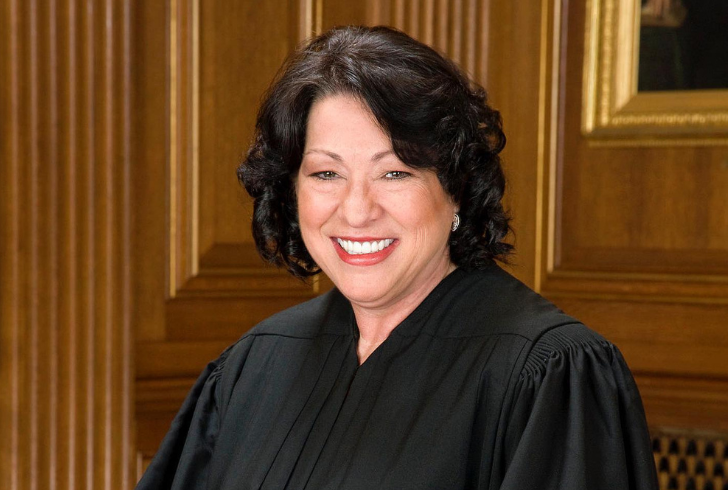
Instagram | sonia_sotomayor1 | Justice Sotomayor dissented, defending the Commission’s right to let judges weigh sentencing disparities.
Justice Sonia Sotomayor, joined by two other liberal justices, disagreed with the majority’s approach. The dissent argued that the Sentencing Commission acted within its authority when it allowed judges to weigh sentencing disparities in compassionate release decisions.
Sotomayor wrote:
“The Commission’s policy statement falls well within the expansive scope of the terms ‘extraordinary’ and ‘compelling’ and is consistent with longstanding judicial practices, which Congress did not alter here.”
The dissent viewed the majority ruling as a restriction on judicial flexibility in correcting outdated sentencing outcomes.
Senator Dick Durbin, the top Democrat on the Senate Judiciary Committee, criticized the outcome, saying the twin rulings weaken a bipartisan reform effort.
Durbin stated that the decisions “significantly weakened a landmark, bipartisan criminal justice reform law in defiance of Congressional intent.”
Legal representatives for Rutherford and Carter did not immediately respond to public requests for comment. A spokesperson for the U.S. Sentencing Commission also declined to issue a statement.
Impact on Sentencing Reform and Courts
The First Step Act has faced implementation challenges since its passage. After its enactment, the U.S. Sentencing Commission temporarily lost its quorum, delaying updates to federal sentencing guidelines and creating uncertainty in courts nationwide.
During that period, judges applied inconsistent standards when deciding what qualified as “extraordinary and compelling,” leading to differing outcomes across federal circuits.
In 2023, the Commission regained quorum and approved a policy stating that long sentences could qualify for review when changes in law created unusually large sentencing gaps. Thursday’s ruling removes that pathway.
The Supreme Court’s decision now clarifies that non-retroactive sentencing reforms cannot serve as the basis for compassionate release claims.
The ruling marks a firm boundary on how far courts can go in applying modern sentencing reforms to older convictions. By reinforcing that Congress did not make the First Step Act retroactive, the Court limits judicial discretion in revisiting long prison terms, even when sentencing standards have shifted significantly over time.
More in Criminal Attorney
-
 GOP Senators Urge Justice Department to Release All Trump Epstein Files
Republican senators are turning up the pressure on the Justice Department. They want every document tied to Jeffrey Epstein released to...
March 15, 2026 -
 Kilmar Abrego Garcia Seeks Dismissal of Tennessee Smuggling Case
Kilmar Abrego Garcia arrived at a federal courthouse in Tennessee as a legal fight surrounding his case continues to draw national...
March 13, 2026 -
 Is It Legal to Prune Your Neighbor’s Tree? Here’s What You Should Know
Trees do not respect property lines. Branches stretch across fences, roots push under patios, and leaves clog gutters all fall long....
March 8, 2026 -
 Sarah Ferguson 6 Companies Dissolved After Epstein File Release
Fresh filings in the United Kingdom have placed Sarah Ferguson back in the spotlight. Six companies directed by the Duchess of...
March 7, 2026 -
 Everything We Know About Savannah Guthrie’s Mother Nancy’s Abduction So Far
The disappearance of 84-year-old Nancy Guthrie has shaken Arizona and drawn national attention. As the mother of Savannah Guthrie, co-anchor of...
March 1, 2026 -
 How to Secure a Government Job During Budget Cuts
Federal hiring slows down when budgets tighten, yet it never stops completely. Agencies still need analysts, advisors, and policy staff to...
March 1, 2026 -
 Brooklyn Beckham’s Billionaire Father-in-Law Breaks Silence on the Family Feud
The Beckham family drama just took another sharp turn. This time, the voice cutting through the noise belongs to billionaire investor...
February 22, 2026 -
 Notre Dame Faces Faculty Resigns After Controversial Appointment
Tension is rising at the University of Notre Dame after two scholars cut formal ties with the Liu Institute for Asia...
February 22, 2026 -
 High Court Upholds Malay Celeb Preacher Da’i Syed’s Rape Conviction
The Shah Alam High Court has spoken, and it spoke clearly. Celebrity preacher Da’i Syed will go to prison now, not...
February 15, 2026
More From Lawyers Favorite
-
 Legal AdviceWhy Native Hawaiian Programs Are Facing Legal Battles in the U.S.
Legal disputes involving Native Hawaiian programs have gained national attention in recent years. Cases connected to Kamehameha Schools, Native Hawaiian health...
July 24, 2026 -
 Law DegreeWhat the Supreme Court’s Final Term Rulings Mean for Americans
The Supreme Court ended its term with several major rulings that could shape national debates around constitutional rights, government authority, and...
July 17, 2026 -
 Criminal AttorneyAlameda County Tightens Fireworks Rules Ahead of Fourth of July
As the Fourth of July approaches, Alameda County is preparing for the holiday with stricter enforcement against illegal fireworks. A newly...
July 11, 2026 -
 Celeb JusticeDawn Richard Lawsuit Against Diddy Dismissed, Attorneys Plan Refiling
Legal proceedings involving Sean “Diddy” Combs and former Danity Kane member Dawn Richard took a significant turn after a federal judge...
July 3, 2026 -
 Legal AdviceNew Mexico Courts Launch Civil Legal HelpLine for Residents
A new statewide helpline is making it easier for New Mexico residents to find reliable information about civil legal matters and...
June 25, 2026