
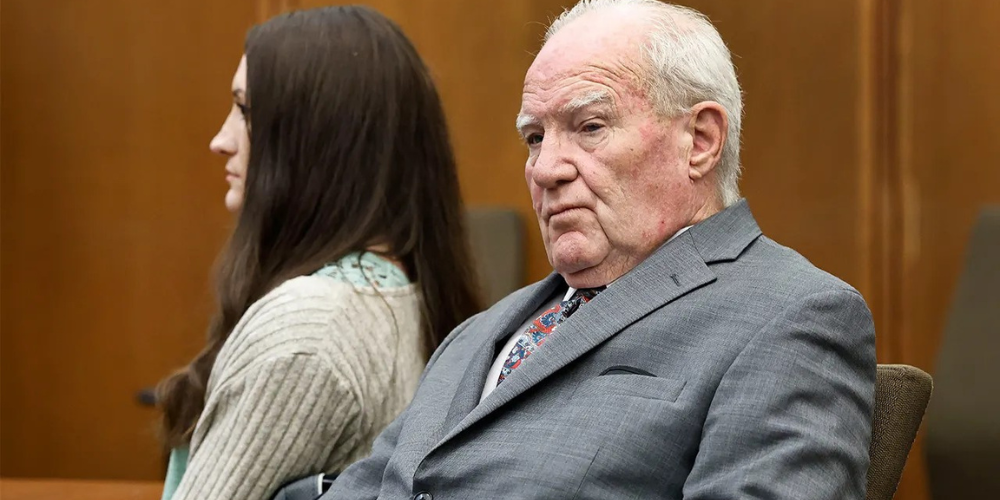
David Yannetti Praises Lindsay Clancy’s Lawyer Amid Jury Deadlock
The Lindsay Clancy murder trial has reached another tense stage as jurors remain unable to reach a unanimous verdict. After six full days of deliberations and two notes indicating disagreement, Karen Read’s former defense attorney David Yannetti has spoken about the pressure facing Clancy’s lawyer, Kevin Reddington.
Yannetti knows that pressure firsthand. He represented Read during two high-profile Massachusetts murder trials and said the waiting period can be one of the hardest parts of a criminal case.
Yannetti Praises Clancy’s Defense

Instagram | bclawonline | Despite the high-stakes tension of jury deliberations, Yannetti noted that Reddington appears confident.
Yannetti said the situation reminded him of the stress that comes when a jury has a person’s future in its hands.
“It immediately brings back the stress and the pressure that comes from having somebody’s life in your hands and the very worst part of a trial, which is when the jury’s out,” Yannetti told Fox News Digital.
He added that Reddington appears confident despite the uncertainty surrounding the jury’s decision.
Yannetti also pointed to similarities between the Clancy and Read cases. Both defendants are professional women with no previous criminal records or court involvement. Both cases also attracted significant public and media attention.
“I think by all accounts, he did a wonderful job with this case, defending this woman in what is a horrific set of facts,” Yannetti said. “I think Kevin has succeeded to a large degree already.”
Jury Remains Divided
Clancy faces three murder charges in connection with the deaths of her children: 5-year-old Cora, 3-year-old Dawson and 8-month-old Callan.
The jury has several possible outcomes to consider. Jurors can find Clancy guilty of first-degree murder, second-degree murder or manslaughter. They can also find her not criminally responsible under her insanity defense.
The case has drawn intense attention because of the nature of the allegations and the questions surrounding Clancy’s mental state.
On Thursday afternoon, Judge William Sullivan again explained the prosecution’s burden to prove guilt beyond a reasonable doubt after receiving another note from the jury. He then instructed the jurors to continue their discussions.

Instagram | missingmurderedunsolved | Clancy faces murder, manslaughter, or insanity defense verdicts for the deaths of her three young children.
The latest development came after Reddington made a forceful request in court. He asked Sullivan to remove what appeared to be a single holdout juror, claiming another juror had accused that person of failing to follow the law.
Sullivan rejected the request.
Retired Massachusetts Judge Carol Erskine, who is not involved in the case, later explained the distinction in an X post. She said refusing to deliberate and refusing to agree are different matters. She also noted that judges must remain extremely cautious about interfering with jury deliberations.
The Pressure of Waiting
Court proceedings ended shortly after 4 p.m., with jurors scheduled to return Friday morning for a seventh day of deliberations.
Yannetti described the waiting as especially difficult for trial lawyers because they lose control once the jury leaves the courtroom.
“It’s torture,” he said, explaining that attorneys can do little beyond wait for the jury’s decision. He compared the experience to being “on the frying pan, being cooked.”
Read experienced a similar situation during her first trial, when jurors deadlocked after five days of deliberations in 2024. She was later acquitted of all homicide-related charges following her second trial, where the jury deliberated for four days.
The Clancy jury’s continued disagreement leaves the case unresolved. As deliberations enter a seventh day, the court must allow jurors time to work through their differences without improperly influencing their decision.
For Reddington, Clancy and both sides of the case, the uncertainty continues until the jury reaches a verdict or the judge determines that no unanimous decision is possible.
More in Legal Advice
-
 Michigan Woman Accused of Locking Sister-in-Law in Basement for Two Years
A disturbing case in Saginaw, Michigan has raised serious concerns after a 58-year-old woman was allegedly held inside a basement for...
April 23, 2026 -
 Kentucky Overrides Veto to Shield Bayer From Roundup Cancer Lawsuits
A major legal and political development has unfolded in Kentucky as lawmakers moved to override Governor Andy Beshear’s veto on legislation...
April 17, 2026 -
 The Duchess of York Sarah Ferguson’s Shocking Ties to Jeffery Epstein Exposed
Sarah Ferguson, better known as ‘Fergie,’ has lived a life that rarely stays quiet. She has moved between royal privilege and...
April 10, 2026 -
 New Housing Law May Help Renters Become Homeowners More Easily
For years, renting felt like a financial dead end for many people. You pay on time every month, yet your credit...
April 4, 2026 -
 Colorado Law Bars Adult Prosecution for 11-YO Accused of Killing His Minor Brother
A quiet neighborhood in Centennial, Colorado, became the center of a heartbreaking investigation after a five-year-old boy was found dead inside...
March 29, 2026 -
 How to Handle Unpleasant Family Habits at Home Without Conflict
Family life isn’t always easy, particularly when someone’s habits start clashing with the way a household runs. From awkward bathroom routines...
March 29, 2026 -
 Britney Spears Rep Calls DUI Arrest an “Inexcusable Incident”
Britney Spears has spent decades in the public eye, but the latest headline about the pop icon carries a serious tone....
March 22, 2026 -
 Atlanta Woman Arrested in $79K Fraud After Impersonating Sheriff Captain
Authorities in Florida recently exposed a disturbing fraud operation that relied on fear, impersonation, and digital money transfers. Investigators say a...
March 22, 2026 -
 GOP Senators Urge Justice Department to Release All Trump Epstein Files
Republican senators are turning up the pressure on the Justice Department. They want every document tied to Jeffrey Epstein released to...
March 15, 2026
More From Lawyers Favorite
-
 Legal AdviceDavid Yannetti Praises Lindsay Clancy’s Lawyer Amid Jury Deadlock
The Lindsay Clancy murder trial has reached another tense stage as jurors remain unable to reach a unanimous verdict. After six...
September 18, 2026 -
 Law DegreeLaw School Applications Reach Record High for 2026
Law school demand continues to rise, with applications for fall 2026 reaching another record level. New statistics from the Law School...
September 11, 2026 -
 Criminal AttorneyTupac Murder Trial Takes a Turn as Defense Calls Davis’ Claims “Bullshit”
The murder trial of Tupac Shakur has taken an unusual turn. Duane “Keffe D” Davis, the former gang leader accused of...
September 3, 2026 -
 Celeb JusticeKenny Chesney Wins Court Case in $300K Online Scam
A California appeals court has ruled in favor of country singer Kenny Chesney after a fan sued him over an online...
August 27, 2026 -
 Legal AdviceSprouts $5M Settlement – Eligibility, Deadline and Details
A $5 million proposed settlement involving Sprouts Farmers Market could provide payments to eligible grocery shoppers who received receipts containing too...
August 20, 2026